
\A wine collection rarely stays uniform. Alongside standard wine bottle sizes, you may collect half bottles for intimate dinners, magnums for celebrations, and larger formats for special vintages. Each brings different storage needs.
Understanding wine bottle sizes helps you plan a cellar that comfortably accommodates your collection. At Wine Cellar Specialists, we design custom wine cellars with both presentation and practical storage in mind—starting with the bottles you own and the collection you want to build.
Wine Bottle Sizes: From Half Bottles to Large Formats
A standard wine bottle holds 750 milliliters, while a magnum holds 1.5 liters, or twice as much. Smaller and larger formats offer additional options for serving, collecting, and displaying wine.
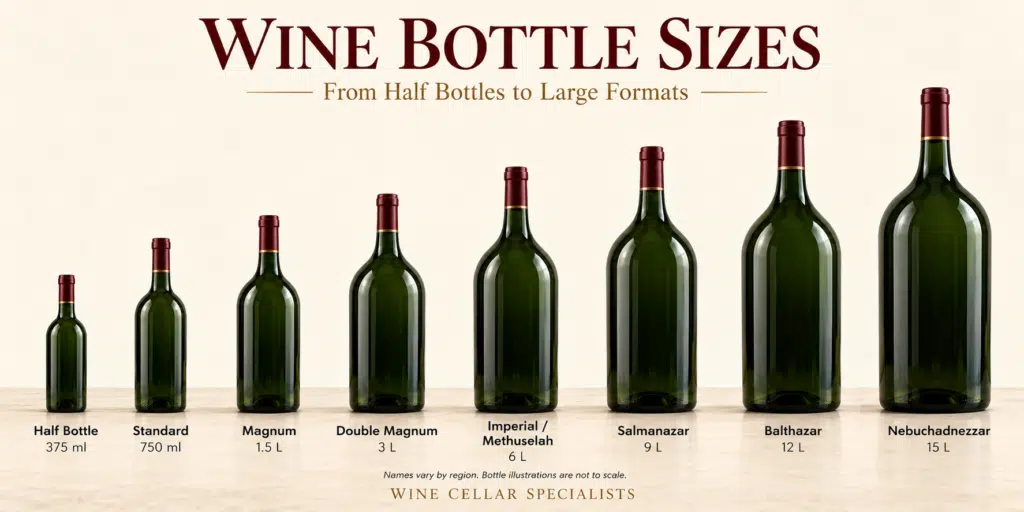
Wine bottle sizes guide showing half bottle, standard, magnum, and large formats with capacities.
Bottle names can vary by region. For example, the 3-liter format is commonly called a Double Magnum in Bordeaux and a Jeroboam in Champagne and Burgundy. Check the stated capacity when purchasing collectible bottles.
For cellar planning, capacity is only the beginning. The bottle’s actual height, width, shape, and weight determine how it fits into your wine racks.
Magnum Wine Bottle Dimensions: How Big Is a Magnum?
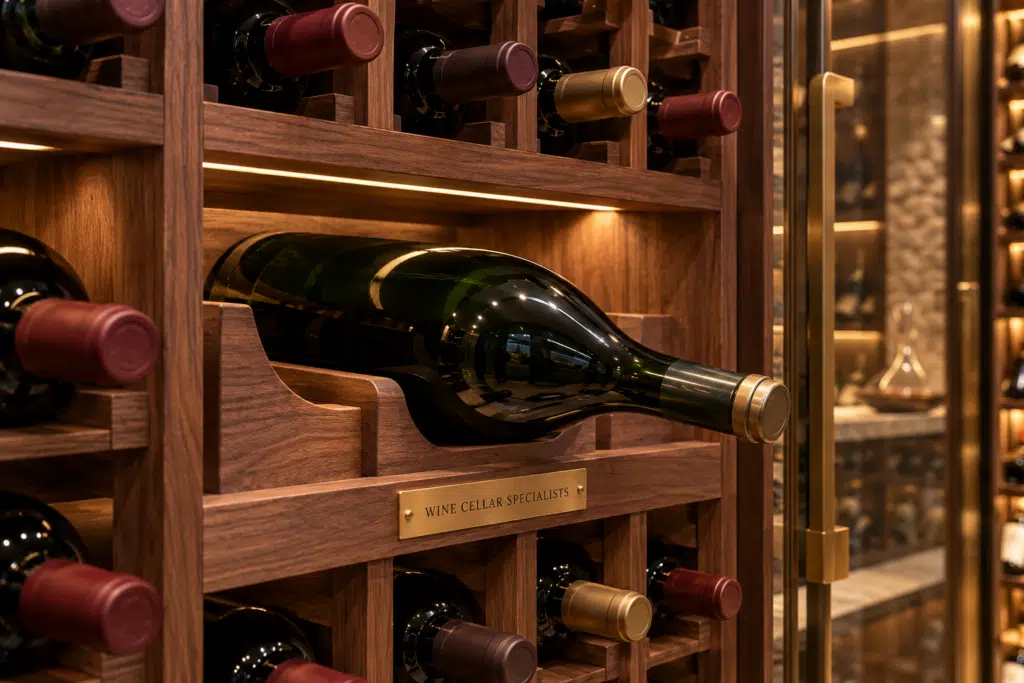
Magnum bottle displayed in a custom wine rack
A magnum wine bottle contains 1.5 liters, equivalent to two standard bottles. That provides approximately 10 servings at 150 ml each, close to a 5-ounce pour.
For an initial reference, a magnum may measure around:
- Height: Approximately 13.5 inches, or 343 mm.
- Diameter: Roughly 4–4.5 inches, or 102–114 mm.
- Capacity: 1.5 liters, or 1,500 ml.
These measurements are approximate rather than universal. For example, one Bordeaux-style magnum measures 343.5 mm tall and 98.1 mm wide, while a Burgundy-style example measures 347 mm tall and 109.7 mm wide. Some bottles therefore fall outside the general width range above.
The practical takeaway: measure your actual magnums before choosing wine racks. A slot designed around an average bottle may not accommodate every producer’s packaging.
Why Wine Bottle Shape Matters as Much as Size
Two bottles can contain the same amount of wine and still require different storage openings. Bordeaux, Burgundy, Champagne, and other bottle styles differ in height, width, weight, and shoulder shape.
A rack that accommodates a narrow bottle may feel restrictive around a broader one. The same consideration applies to magnums: a Bordeaux-style magnum and a Burgundy-style magnum should not automatically be assigned identical storage dimensions.
When reviewing a collection for custom wine cellar design, consider:
- The widest part of each bottle.
- Overall bottle length, including the closure.
- Shoulder and neck shape.
- Filled bottle weight.
- Space needed to insert and remove bottles comfortably.
This is particularly useful for collectors who buy from different regions or frequently add unusual bottle formats.
Choosing Wine Racks for Magnum and Large-Format Bottles

Woman and man selecting wine in a custom cellar with dedicated racks for magnum and large-format bottles.
Magnums often need wider openings than racks intended for standard bottles. Larger formats may also require dedicated supports and additional depth.
A thoughtful wine rack layout can combine several storage options:
Individual magnum openings: Dedicated spaces help organize larger bottles while keeping each one accessible.
Large-format display sections: Feature shelves or purpose-built cradles can give special bottles a prominent place in the cellar.
Adjustable storage: Where the rack system allows it, adjustable supports offer flexibility as bottle sizes change.
Mixed-format layouts: Combining standard bottle storage with magnum sections helps accommodate a varied collection.
Confirm the rack manufacturer’s supported bottle dimensions and weight limits before installation. Allow clearance for handling rather than matching the opening exactly to the bottle’s diameter.
For example, a bottle measuring 4.3 inches across needs an opening that accommodates that width plus appropriate handling clearance—not simply a slot labeled “magnum.”
Planning a Custom Wine Cellar Around Your Collection
A useful cellar plan starts with an inventory. Count your standard bottles, magnums, and larger formats separately, then identify what you expect to purchase next.
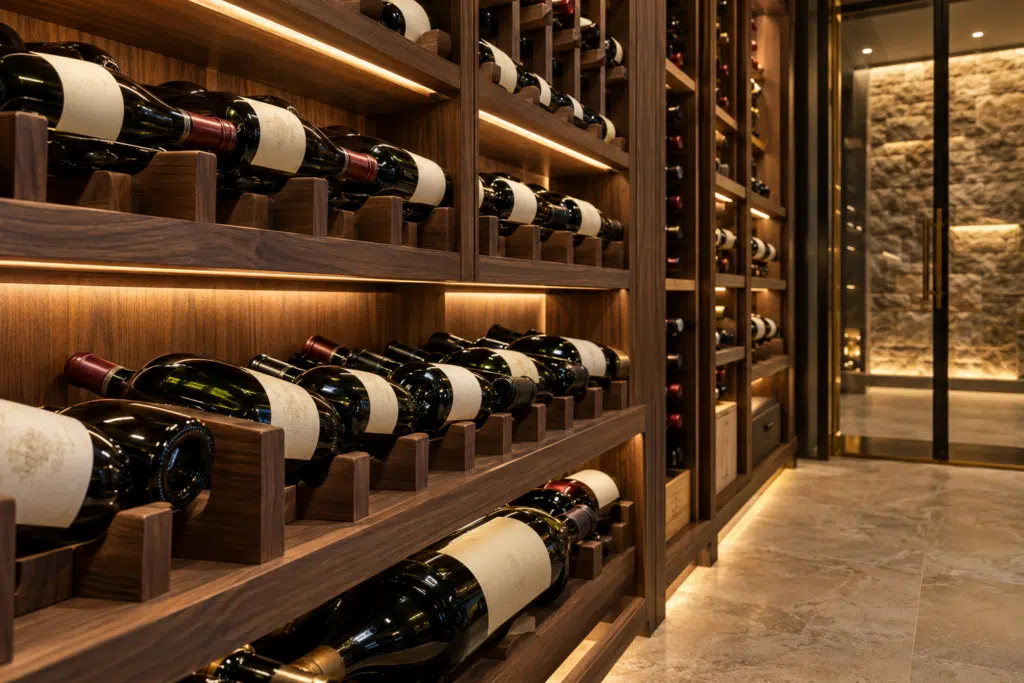
Angled view of wine bottles displayed in custom walnut racks with warm LED lighting inside a luxury wine cellar
For a residential wine cellar, that might mean reserving dedicated space for celebration magnums or collectible vintages. In a restaurant or commercial wine cellar, it may mean balancing large-format displays with convenient access for service.
Before finalizing your design:
- Record the dimensions of your largest and most unusual bottles.
- Estimate future purchases by bottle format.
- Decide which bottles need prominent display space.
- Place heavier bottles where they’re easy to handle.
- Confirm capacity using your actual bottle mix.
A cellar’s advertised bottle count may reflect a particular standard bottle shape. Wider bottles and magnums can change how many bottles the finished layout accommodates.
Planning around those differences helps create a wine cellar that remains useful as your collection grows.
FAQs About Wine Bottle Sizes
From magnum dimensions to wine rack compatibility, find answers to your wine bottle storage questions.
How many standard wine bottles equal one magnum?
One magnum holds 1.5 liters, equivalent to two standard 750 ml wine bottles.
How tall is a magnum wine bottle?
Approximately 13.5 inches is a useful starting reference, but height varies by bottle design. Measure the specific bottles you plan to store.
How many glasses of wine are in a magnum?
A magnum provides approximately 10 glasses at 150 ml per serving. Larger pours produce fewer servings.
Will a magnum fit in a standard wine rack?
It depends on the rack opening and bottle dimensions. Many racks designed for standard bottles need a separate magnum section or wider supports.
Do all 750 ml bottles fit the same wine racks?
No. Equal capacity does not guarantee equal dimensions. Broader or unusually shaped bottles may require additional clearance.
Give Every Bottle the Space It Deserves
Your collection deserves a cellar designed around its character—from everyday favorites to celebration magnums and prized large-format bottles.
Wine Cellar Specialists designs and builds custom wine cellars for homes and commercial spaces across the United States. Let us help you plan wine storage that brings together bottle capacity, everyday accessibility, and a beautiful presentation.


